
The 50.5-metre-high historic tower was reduced to just its base.
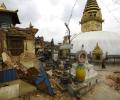
The earthquake has threatened the existence of one of the seven UNESCO-listed world heritage sites of Kathmandu.

The devastating quake of 8.3-magnitude on Richter scale that fateful day of January 15 had its epicentre at some 10 kms south of Mt Everest.

On April 25 2015, a massive earthquake in Ghorka, Nepal, followed by another devastating one on May 12, killed nearly 9,000 people and injured over 21,000. More than 600,000 homes were damaged or destroyed. Two years later, the paved alleys are still lined by the skeletons of homes once filled with families. Children carefully side-step piles of broken brick on their way to school. According to data available, barely 5 per cent of the destroyed houses have been rebuilt, according to the National Reconstruction Authority. That 800,000 families still do not have their houses rebuilt is simply a disaster.

Beyond colossal loss of human lives, if there is anything perhaps equally overwhelming in Nepal's earthquake tragedy, it is the monumental damage the country's iconic heritage has suffered due to the calamity.
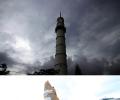
A comparative feature that reveals the true extent of the damage caused by Saturday's earthquake to Nepal's history.

Despite the devastation that has struck this tiny mountain nation, Dr Vani Kori - who volunteered her service in Nepal for 10 days - believes it will soon rebuild itself.

Nepal draws tourists from China, Europe, USA, Australia and India.
